


CIQTEK has expanded its NMR portfolio with two new developments: the CryoHe Series helium cryogenic NMR probe and the CAN-S400 and CAN-S600 high-field solid-state NMR spectrometers.
Unveiled on October 31 during the 2nd Conference on Analytical Science and Instrumentation (NCASI 2026) in Wuhan, China, the new products address two important needs in NMR research: higher sensitivity for challenging liquid-state samples and high-field structural characterization of solid materials.
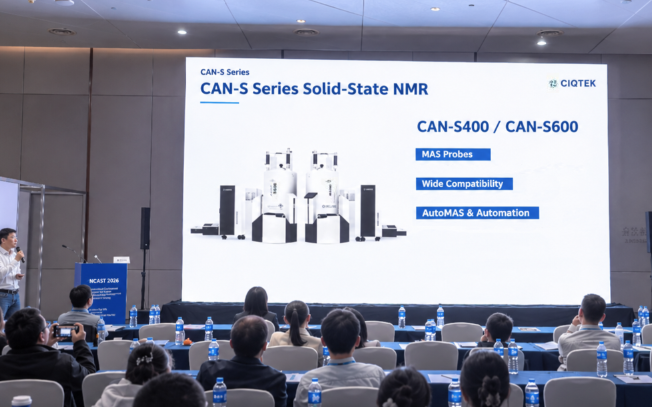
Figure 1. Launch of the CIQTEK CryoHe Probe and CAN-S Solid-State NMR Systems
CryoHe: Higher Sensitivity at Cryogenic Temperature
In NMR spectroscopy, sensitivity can determine whether weak signals are detected at all, especially when working with low-concentration, low-abundance, or compositionally complex samples.
The CIQTEK CryoHe Series helium cryogenic probe uses closed-cycle deep cryogenic cooling to stabilize the core RF coil at around 20 K.
Compared with a conventional room-temperature probe, the CryoHe probe can typically improve the signal-to-noise ratio by around 2× or more for nuclei such as ¹H and ¹³C. When the same signal-to-noise level is required, this can shorten measurement time by roughly an order of magnitude.
The probe supports ¹H, ¹³C, ¹⁵N, ³¹P, and ¹⁹F, together with automatic tuning and matching. A low-temperature ²H preamplifier is used to improve lock signal quality and magnetic-field stability.
These capabilities are particularly useful in areas such as structural biology, drug research, metabolomics, and natural product analysis, where samples may be limited in quantity or difficult to characterize using conventional sensitivity levels.
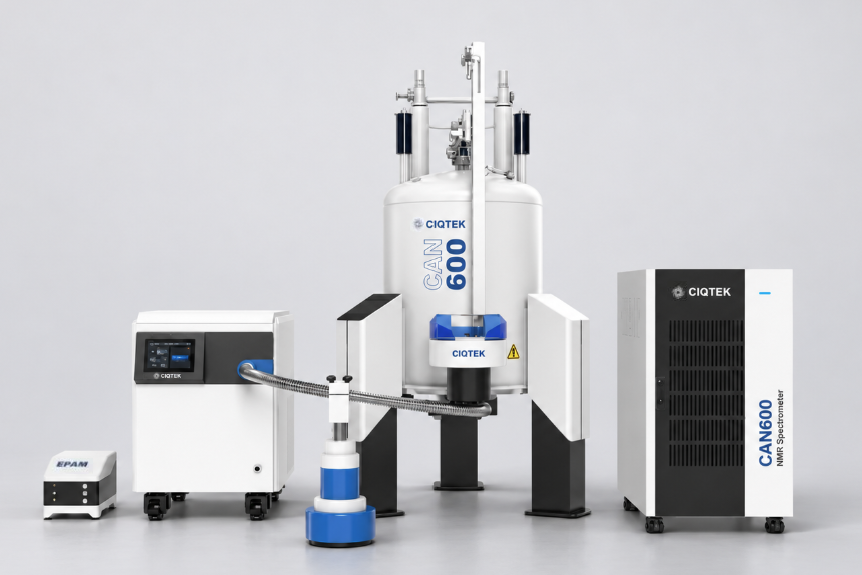
Figure 2. CIQTEK CryoHe Cryogenic Probe with a 600 MHz Liquid-State NMR System
CAN-S400 and CAN-S600 for High-Field Solid-State NMR
CIQTEK also introduced the CAN-S400 and CAN-S600 high-field solid-state NMR spectrometers, extending the CAN platform into solid-state NMR applications.
Solid-state NMR enables researchers to study the chemical environment and molecular dynamics of insoluble or poorly soluble solid materials while preserving their structure.
The CAN-S Series uses a distributed spectrometer architecture and high-uniformity, high-stability superconducting magnets, with 9.4 T and 14.1 T configurations currently supported.
Multiple rotor sizes are available, including 3.2 mm, 4 mm, and 7 mm. The 3.2 mm rotor supports spinning speeds of up to 24 kHz.
The system supports automatic magic-angle calibration, probe tuning and matching, as well as MAS speed setting and monitoring, rotation stability control, gas-path status monitoring, and abnormal-condition protection.
At the hardware level, the CAN-S platform uses an integrated architecture that also supports liquid-state NMR workflows, allowing more efficient switching between solid-state and liquid-state measurements within the broader CAN platform.
Expanding the CIQTEK NMR Platform
The simultaneous launch of the CryoHe probe and CAN-S Series expands CIQTEK's NMR capabilities from key components to complete instrument systems.
For liquid-state NMR, the CryoHe probe provides higher sensitivity for samples with weak or difficult-to-detect signals. For solid-state research, the CAN-S Series supports structural studies of materials that are insoluble or whose original structure needs to be preserved.
Together, the two developments extend CIQTEK's NMR capabilities for structural biology, drug research, metabolomics, natural products, and solid-material characterization.